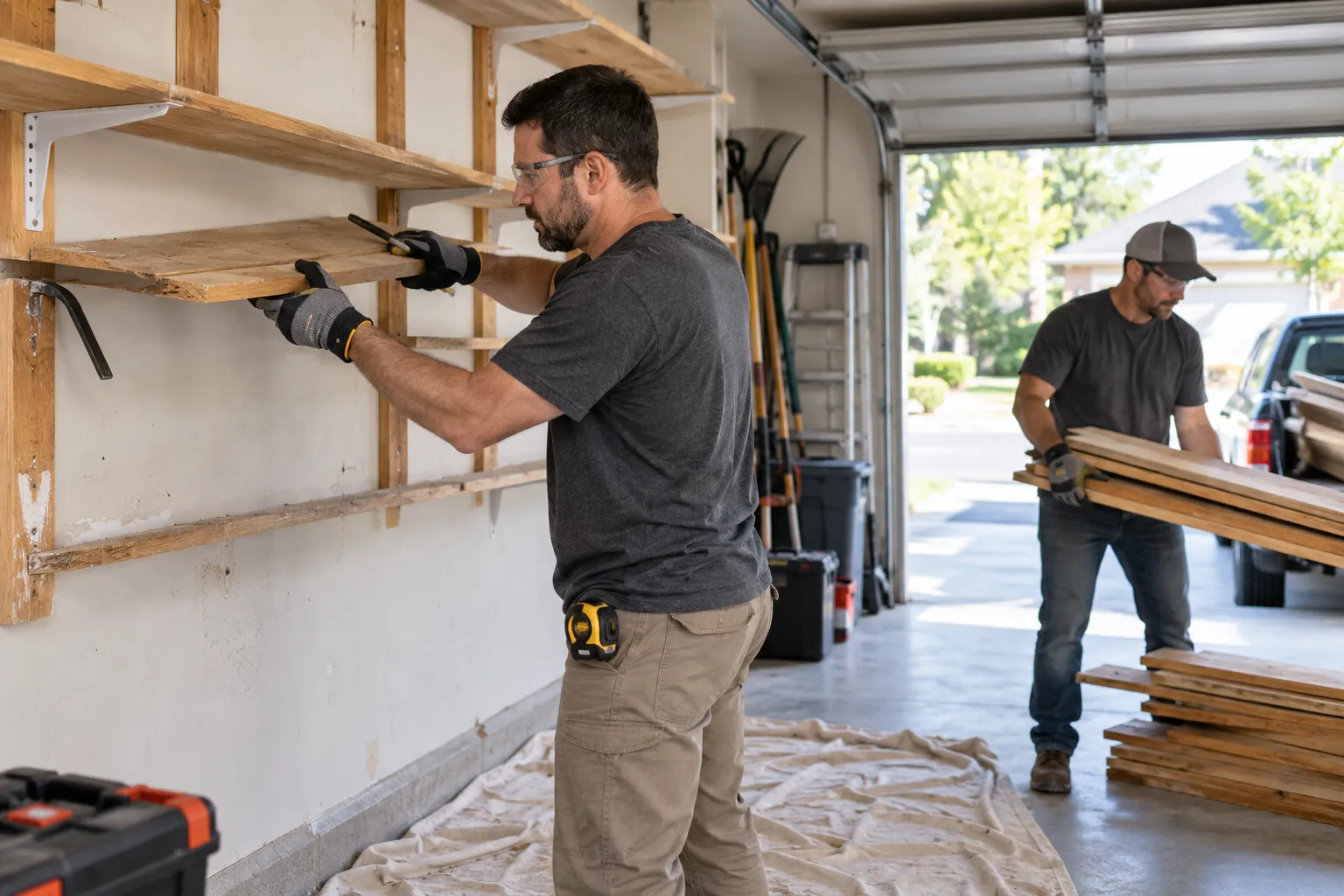
Confirm that the shelving is non-structural and clear of utilities before anyone starts removing it. A simple shelf can still hide electrical cable, plumbing, or wall damage.
1. Is it freestanding or attached?
Freestanding units usually involve lifting and disassembly. Wall-mounted systems require a closer look at brackets, fasteners, and the surface behind them.
2. What runs through the wall?
Look for outlets, switches, plumbing fixtures, utility panels, and visible conduit. Stop if the attachment point may conflict with wiring, plumbing, or a structural member.
3. What should remain?
Mark the exact shelves, cabinets, and workbench sections approved for removal. Empty every retained cabinet so there is no confusion during loading.
4. What condition is the material in?
Water damage, mold, pest activity, crumbling board, or suspected asbestos changes the scope. Do not disturb suspect material until an appropriate professional evaluates it.
5. Who handles the debris?
Confirm whether tear-out, stacking, haul-away, and the final sweep are part of the same job. Our garage light-demolition scope covers selected non-structural fixtures, not structural walls, roofs, electrical, or plumbing work.
Need help with this job?
Review the boundaries for garage light demolition, then call with your item list and access details.
Call (202) 555-0147