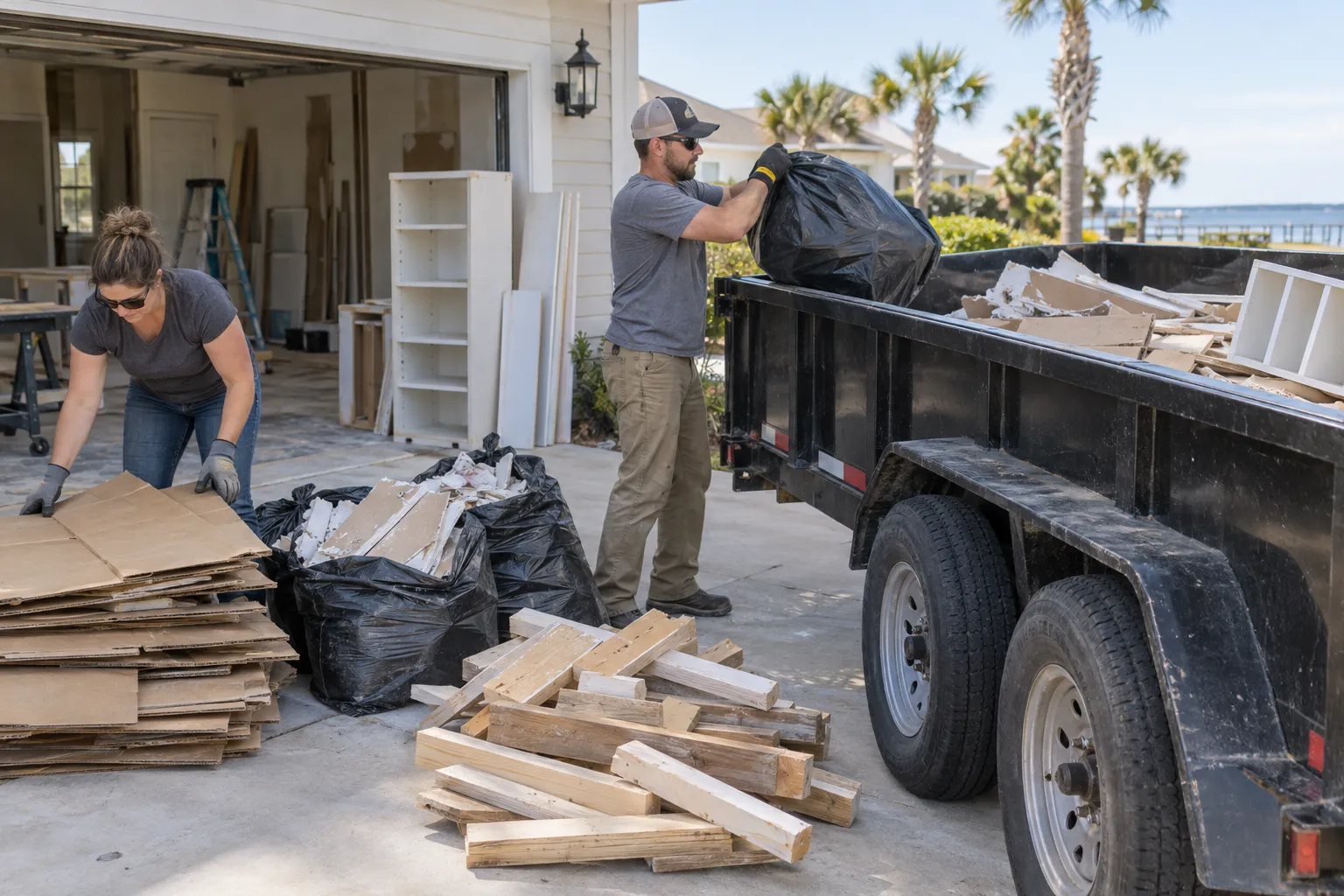
Sort by material and risk before you sort by size. A bag of drywall scraps, a stack of lumber, and a can of solvent may occupy similar space but require very different handling.
Build separate material groups
- Flatten clean cardboard and keep it dry.
- Stack short lumber with cut ends aligned; remove or bend exposed nails when it is safe to do so.
- Bag light drywall fragments without overloading the bags.
- Keep metal pieces together and protect sharp edges.
- Set dense material such as tile or concrete apart for advance review.
Do not mix restricted products into debris
Wet paint, solvents, fuel, pesticides, asbestos-containing material, pressurized cylinders, and unidentified chemicals are not ordinary renovation debris. The EPA directs households to local hazardous-waste programs for products with hazardous characteristics. Local rules decide where and when those materials can go.
Estimate by both volume and weight
Photos show how much floor space a pile covers, but dense material can change the equipment and disposal plan. Provide close views of the material and one wide view showing the route to the driveway.
For accepted non-hazardous material, see garage debris removal and describe the heaviest part of the load first.
Need help with this job?
Review the boundaries for garage debris removal, then call with your item list and access details.
Call (202) 555-0147